
Website Design for Businesses: 7 Must-Knows
Your website can be the first place a potential customer meets your brand, and that first impression can shape what happens next. Effective Website Design for Businesses is not simply about choosing attractive colors or adding impressive animations. It is about creating a clear, useful, trustworthy experience that helps visitors understand what you offer and take the next step.
A strong business website should answer basic questions quickly: Who are you? What do you offer? Why should someone trust you? And what should they do next? When design, content, performance, and usability work together, your website becomes more than an online brochure. It becomes a practical business asset.
In this guide, we will break down seven important principles of modern website design, explain what they mean in practice, highlight common mistakes, and show you how to make better decisions before and during a website project.
1. Website Design for Businesses Starts With Clear Goals
Good Website Design for Businesses begins before anyone opens a design tool. The first step is deciding what the website needs to achieve.
For some businesses, the main goal may be generating enquiries. For others, it could be booking appointments, selling products, showcasing a portfolio, building credibility, or getting visitors to call. Your goal affects the site's structure, content, calls to action, and even the information you place above the fold.
Before planning pages, define:
- Your primary business objective
- Your ideal customer
- The actions you want visitors to take
- Your most important products or services
- The questions or concerns customers usually have
- The metrics you will use to judge performance
This is one reason Website Design for Businesses should be approached as a business decision, not just a visual project. A beautiful website that does not support a clear objective can still underperform.
Design Website Experiences Around User Intent
Think about what a visitor is likely to want when they arrive. Someone searching for a service page may need pricing information, proof of expertise, examples, FAQs, or an easy way to request a consultation.
Your navigation should make these paths obvious. Avoid making visitors hunt through several pages to find essential information.
2. Website Design for Businesses Should Be Easy to Use
Good Website Design for Businesses should make the interface easy to understand without instructions. Clear navigation, readable content, consistent layouts, and familiar interface patterns reduce friction.
Keep the main navigation focused on the pages that matter most. Depending on the business, these may include:
- Home
- About
- Services
- Portfolio or case studies
- Blog or resources
- Contact
You do not need to hide every page under complicated menus. A simple structure is often easier for visitors to understand and easier for you to maintain.
Build for Clarity, Not Clutter
Every section should have a purpose. If a page contains too many competing buttons, decorative elements, or long blocks of text, visitors may struggle to identify the next step.
Use visual hierarchy to guide attention. Headings should introduce ideas, subheadings should break information into useful sections, and calls to action should be clear without being aggressive.
For Website Design for Businesses, simplicity does not mean making every site look plain. It means removing anything that distracts from the user's goal.
3. Responsive Website Design for Businesses
People access websites on a wide range of screen sizes. A page that looks polished on a desktop can still create problems on a phone if text is difficult to read, buttons are too close together, or important content becomes awkward to navigate.
Responsive Website Design for Businesses allows a site's layout to adapt to different screen sizes. A good implementation considers more than shrinking desktop elements. It should account for spacing, typography, navigation, images, forms, and touch interaction.
What to Check on Mobile
Before launching, test important pages on different screen sizes and check:
- Can users read the text without excessive zooming?
- Are buttons and links easy to tap?
- Does the navigation remain understandable?
- Are images displayed correctly?
- Do forms work comfortably on smaller screens?
- Is important information still easy to find?
Mobile-friendly design also supports a better overall user experience. Since search engines use mobile-first indexing, businesses should treat mobile usability as a core website requirement rather than an optional extra.
4. Website Design for Businesses Should Build Trust
Visitors make quick judgments about whether a business feels credible. Design alone cannot create trust, but a clear and professional website can reinforce it.
Strong Website Design for Businesses should make credibility visible through useful evidence rather than vague claims. Depending on your business, this can include:
- Clear service descriptions
- Genuine customer testimonials
- Relevant case studies
- Portfolio examples
- Professional contact information
- About page with useful background
- Clear policies where appropriate
- Consistent branding
Trust is also influenced by small details. Broken links, outdated information, inconsistent fonts, missing images, or confusing forms can make a business appear less reliable.
Let Your Brand Feel Consistent
Your website should feel like the same business customers encounter elsewhere. Use consistent brand colors, typography, imagery, tone, and messaging across your website and social media presence.
Consistency does not mean repeating the same content everywhere. It means creating a recognizable experience so customers can move between channels without feeling like they have landed in a different brand.
5. SEO-Friendly Website Design for Businesses
Website Design for Businesses is not successful simply because a site has many pages. Each page should help visitors make a decision or complete a task.
For example, a service page should explain what the service is, who it is for, what problems it addresses, what the process looks like, and what the visitor can do next.
Use straightforward language. Avoid filling pages with industry jargon when a simpler phrase would be clearer.
Write for People and Search Engines
Website Design for Businesses and SEO-friendly website content start with understanding search intent. If someone searches for business website design, they may want to compare approaches, understand the process, see examples, or find a provider.
A useful page should satisfy that intent rather than repeating a keyword in every paragraph.
Include relevant terms naturally, such as:
- business website design
- responsive web design
- user experience
- website development
- conversion-focused design
- website navigation
- landing pages
- SEO-friendly websites
- website content strategy
Search engines can understand context through related concepts, entities, headings, and page structure. You do not need to write awkward sentences just to insert a target phrase.
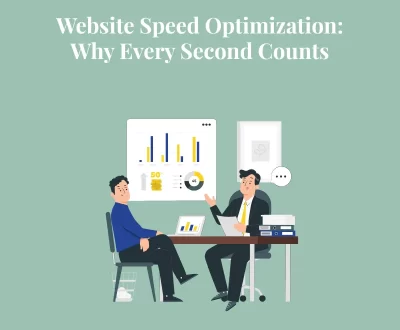
6. Website Design for Businesses and Site Performance
Website Design for Businesses cannot compensate for a website that feels slow or unstable. Performance affects how comfortably visitors can browse, interact with pages, and complete important actions.
Website performance can be influenced by image sizes, scripts, fonts, hosting, third-party tools, and the overall page structure.
Practical Ways to Improve Performance
Start with the basics:
- Use appropriately sized images
- Choose efficient image formats
- Avoid unnecessary plugins and scripts
- Reduce unused code where possible
- Keep third-party tools under control
- Use reliable hosting
- Test important pages regularly
- Monitor real user experience
Website Design for Businesses should consider performance during development, not only after a website launches. A developer and designer who work together can make smarter choices about animations, media, page components, and functionality.
For Website Design for Businesses, technical quality is part of the customer experience. A site that looks good but performs poorly is not delivering the complete experience your audience expects.
7. Conversion-Focused Website Design for Businesses
Website Design for Businesses should make the next step obvious. This is where calls to action become important.
A call to action does not always need to say "Buy Now." Depending on the page and visitor's stage, it could be:
- Request a Quote
- Book a Consultation
- View Our Services
- Explore the Portfolio
- Get in Touch
- Download the Guide
- Start Your Project
Use calls to action that match the user's intent. Someone reading an educational blog may not be ready to make a purchase, while someone on a service page may be actively looking for help.
Improve Website Design for Better Conversions
Conversion-focused design is about reducing uncertainty and making the desired action easier. Consider the complete path:
Visitor arrives → understands the offer → sees evidence → gets answers → feels confident → takes action.
This does not mean filling every screen with buttons. It means giving visitors the right information at the right moment.
A strong Website Design for Businesses strategy connects the website's business goals with the visitor's needs. That balance is what makes a website useful rather than merely attractive.
Website Design vs. Website Development
Website Design for Businesses and development work closely together, but they are not identical.
| Website Design | Website Development |
| Focuses on visual presentation | Focuses on functionality and implementation |
| Covers layout, typography, colors, and hierarchy | Covers code, integrations, databases, and technical features |
| Shapes the user experience | Makes the planned experience work |
| Supports branding and communication | Supports performance, security, and functionality |
The strongest websites bring both disciplines together. A visually impressive concept may need technical adjustments to perform well, while technically strong development still needs thoughtful design to make the experience easy to use.
Common Mistakes to Avoid
Even well-intentioned businesses can make website decisions that reduce usability. Watch out for these common problems.
1. Designing for Yourself Instead of Your Customer
Your personal preferences matter less than what your audience needs. Test your assumptions against customer questions, behavior, and feedback.
2. Putting Too Much Information on the Homepage
Your homepage should guide visitors, not explain everything at once. Give enough context to establish relevance and trust, then direct people to deeper pages.
3. Using Unclear Calls to Action
"Submit" may technically work, but a more specific CTA can communicate what happens next. Clarity reduces hesitation.
4. Ignoring Mobile Users
Do not treat mobile as a smaller desktop screen. Check the actual experience across different devices and interactions.
5. Choosing Appearance Over Usability
Animations and visual effects can support a brand, but they should not make navigation harder, slow pages down, or distract from important content.
6. Forgetting Ongoing Maintenance
A website needs updates. Content, software, forms, integrations, security measures, and performance should be reviewed over time.
A Practical Website Design Checklist
Before launching a new site or redesign, use this quick checklist:
- The primary business goal is clear
- The target audience is defined
- Navigation is simple
- Every important page has a clear purpose
- The website works well on mobile
- Content matches search intent
- Calls to action are easy to understand
- Images are optimized
- Forms and important links have been tested
- Branding is consistent
- Trust signals are genuine and relevant
- Basic SEO elements are in place
- Performance has been tested
- Analytics and relevant tracking are configured
- There is a plan for ongoing maintenance
Frequently Asked Questions
What Makes Good Website Design for Businesses?
Good Website Design for Businesses combines clear messaging, easy navigation, responsive layouts, strong usability, trustworthy information, fast performance, and purposeful calls to action. The design should support both customer needs and business goals.
How Important Is Responsive Web Design?
Responsive design is essential because visitors use different devices and screen sizes. A responsive website adapts its layout and interactions so the experience remains usable across phones, tablets, laptops, and desktops.
How Does Website Design Affect SEO?
Website design can influence SEO through mobile usability, page structure, navigation, content organization, accessibility, performance, and user experience. Design and technical SEO should work together rather than being treated as separate projects.
Should a Small Business Invest in Professional Website Design?
Professional Website Design for Businesses can help a small business communicate its value clearly, establish credibility, generate enquiries, and make it easier for customers to take action. The right investment depends on the business's goals, audience, budget, and growth plans.
How Often Should a Business Redesign Its Website?
There is no universal redesign schedule. Instead, review your site based on performance, customer feedback, technology, business changes, branding, usability, and content. Sometimes targeted improvements are more useful than a complete redesign.
What Should I Include on a Business Website?
At minimum, most business websites need clear information about the company, services or products, contact options, and relevant trust signals. Depending on the business, you may also need case studies, FAQs, a portfolio, testimonials, location information, booking tools, or resources.
Conclusion: Build a Website With a Purpose
Great Website Design for Businesses is not about chasing every new visual trend. It is about creating a Website Design for Businesses experience that makes your business easy to understand, easy to trust, and easy to choose.
The best Website Design for Businesses decisions start with a clear goal, then bring together user experience, responsive design, useful content, performance, SEO, trust, and conversion paths. When these elements support one another, your website can become a stronger part of your overall digital strategy.
At Garima Yadav, we understand that your website needs to do more than look professional. It needs to represent your brand, serve your audience, and support your business goals.
If your current website feels outdated, difficult to use, or disconnected from your marketing strategy, it may be time to rethink what it is designed to achieve.
Ready to build a stronger digital presence? Contact Garima Yadav to discuss a website strategy tailored to your business goals.
Request a free quote
We offer professional SEO services that help websites increase their organic search score drastically in order to compete for the highest rankings even when it comes to highly competitive keywords.
More from our blog
See all posts






Recent Posts
- Website Design for Businesses: 7 Must-Knows July 6, 2026
- Responsive Web Design Services: Why Mobile Matters July 6, 2026
- SEO Website Audit Services July 6, 2026
Pingback: Google Ads vs SEO: Which Marketing Strategy Wins in 2026? - Garima Yadav